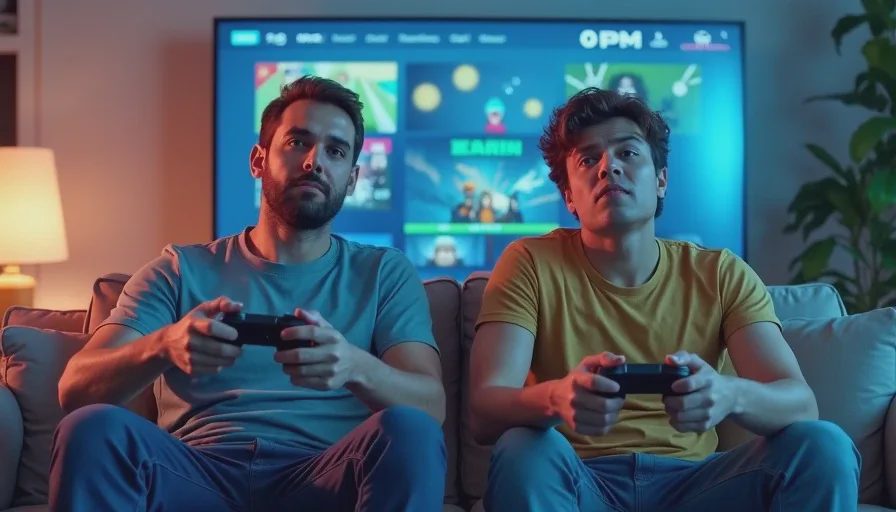
Here's the situation.
You're an adult. You have a job. You have responsibilities. You have a limited amount of evening energy – and it's not what it used to be.
You want to play a co-op game with a friend or partner. Something that doesn't require a four-hour commitment. Something that doesn't demand constant focus. Something that's fun without being exhausting.
But you don't know what to pick. There are thousands of options. And you're tired. So you ask the internet.
Help me pick a co-op game for two adults with limited weeknight energy.
I've been in this situation. I've made good choices. I've made bad choices. And I've learned a few things along the way. Here's what I'd recommend – and what I'd avoid.
The problem with most co-op games
Before we talk about the good ones, let's talk about the bad ones.
They demand too much time
Many co-op games are designed for long sessions. Raids take hours. Missions take an hour. You can't just play for twenty minutes and feel progress.
You need time to get into the flow
You need time to coordinate with your partner
You need time to get anything done
If you only have an hour, you spend half of it just getting started.
They require too much focus
Some co-op games are intense. They demand your full attention. Every second counts. Mistakes are punished.
After a long day of work, that's not what you want. You want something you can play without stress.
They demand too much coordination
Some co-op games require constant communication. You need to strategize. You need to call out enemies. You need to coordinate movements.
Communication is good. But when you're tired, it's exhausting.
They're hard to quit
This is the worst part. You're playing a game. You're in the middle of something. Your partner needs to go. And there's no pause. There's no save.
You're stuck. You either keep playing or you lose progress.
What makes a good weeknight co-op game?
Based on the problems above, we can define what we're looking for.
Short sessions
The game should have natural stopping points. Levels should be short. Missions should be under thirty minutes. You should feel like you accomplished something even in a brief session.
Low mental load
The game shouldn't demand constant focus. You should be able to play it while having a conversation. You should be able to play it without getting stressed.
Easy to coordinate
You shouldn't need to be on a headset. You shouldn't need to plan for an hour. You should be able to just... play.
Easy to stop
The game should respect your time. You should be able to quit at any moment. You shouldn't lose progress because real life got in the way.
The good options
Here are the games that fit the criteria above.
Deep Rock Galactic
The core loop: You're dwarves. You mine minerals. You fight bugs. You extract. Each mission takes fifteen to thirty minutes. You choose the difficulty.
Why it works for low-energy nights:
Missions are short and contained
Difficulty is adjustable
The community is friendly
No pressure – losing a mission just means you try again
The game is funny and chaotic
You can play without voice chat
Why it might not work:
It's still a shooter. You need some reaction time.
Some missions can be stressful at higher difficulties.
Verdict: This is my top recommendation. It's the co-op game I've played the most in the last year.
PlateUp!
The core loop: You run a restaurant. You cook food. You serve customers. It's like Overcooked, but with a roguelike structure.
Why it works for low-energy nights:
Each run is about twenty minutes
You can pause at any time
The game is about planning, not reaction speed
It's relaxing in a satisfying way
Why it might not work:
It's local co-op only
It can get chaotic in later stages
Verdict: Perfect for a relaxed evening with a partner on the couch.
It Takes Two
The core loop: Two characters go through a variety of levels. Each level has unique mechanics. You work together to solve puzzles and complete platforming sections.
Why it works for low-energy nights:
The game is pure co-op
The levels are creative and varied
It's a single experience – you finish it together
You can play in short chunks
Why it might not work:
It's a full story experience – a commitment
Some sections require precise platforming
It requires constant coordination
Verdict: It's a longer commitment, but it's worth it. Great for a weekly date night.
Monster Hunter World
The core loop: You hunt monsters. You craft gear. You hunt bigger monsters.
Why it works for low-energy nights:
Hunts are about twenty to thirty minutes
You can play in short sessions
The game is forgiving – you can fail and try again
The community is supportive
Why it might not work:
The learning curve is steep
Some hunts are longer and more intense
Verdict: Good if you both already know the game. Not the best for learning together from scratch.
Stardew Valley (Co-op)
The core loop: You farm. You explore. You socialize. You fish. It's a relaxing farming sim with a co-op mode.
Why it works for low-energy nights:
There's no pressure
You can play at your own pace
Each day is about fifteen minutes
You can pause at any time
Why it might not work:
The co-op experience is parallel play, not truly collaborative
Some people find it boring
Verdict: Perfect for a slow, relaxing evening with a partner.
Unrailed!

The core loop: You build a train track while the train moves. You need to gather resources and lay tracks before the train crashes.
Why it works for low-energy nights:
Each run is short
The pressure is manageable
It's simple to learn
Why it might not work:
It gets stressful in later stages
It's a pure action game
Verdict: Good for a low-stakes but active session.
What about the popular co-op games?
Let me be honest about some popular games. They might not be the right fit for low-energy nights.
Overcooked
The problem: It's too stressful. It requires constant focus. It's chaotic. It demands coordination. It's the opposite of relaxing.
The verdict: Avoid if you're tired. It will make you more tired.
League of Legends / Dota 2
The problem: Matches are long. The community is toxic. It requires constant focus. It's competitive. It's not relaxing.
The verdict: Hard avoid for weeknight play.
A Way Out
The problem: It's a linear story game. You can't stop easily. It requires attention.
The verdict: Good for a weekend afternoon. Not for a tired weeknight.
The "adult co-op" criteria
Here's how I evaluate games for my limited weeknight energy.
The ten-minute rule
Can I get something meaningful done in ten minutes? If the answer is no, the game is too demanding.
The pause test
Can I pause the game at any moment without losing progress? If the answer is no, the game is too demanding.
The conversation test
Can I play this game while having a conversation with my partner? If the answer is no, the game is too demanding.
The "one more turn" test
Does the game make me feel like I want to keep playing? That's a good sign. But if the game makes me feel like I need to keep playing, that's a bad sign.
My weekly rotation
Here's what actually works for me.
Monday: Deep Rock Galactic. A few missions. Chill and chaotic.
Tuesday: PlateUp! A few runs. Relaxing and satisfying.
Wednesday: Stardew Valley. Slow farming. No pressure.
Thursday: It Takes Two (weekly progression). A couple of chapters.
Friday: Something new. A game we haven't tried yet.
This rotation works because it respects our limited time. It's varied. It's flexible. It doesn't demand too much.
No comments yet — be the first to share a thought.