
I'm about to say something that might get me thrown out of this forum.
Build guides are ruining games. Not all build guides. Not the ones that give you helpful tips. The ones that claim to have found the "best" build. The "most broken" build. The "delete bosses in seconds" build.
These guides are popular. They get millions of views. They convince players that there's a right way to play. And I think they can make a great game worse.
Unpopular opinion: over-optimized build guides can make a great game worse. Agree or disagree?
Before you downvote me, hear me out. I'm not saying guides are evil. I'm saying they can change how we experience games – and not always for the better.
The problem with "best" builds
Here's the thing about "best" builds. They're mathematically correct. They do the most damage. They kill bosses the fastest. They're efficient.
But games aren't spreadsheets. They're experiences.
The discovery is lost
When you follow a guide, you don't discover anything. You're just copying someone else's homework.
You don't learn why the build works
You don't experiment with alternatives
You don't make mistakes and learn from them
The game becomes a checklist. Not an adventure.
The agency is gone
Builds are supposed to be personal. Your choices should reflect how you want to play. A guide takes that choice away.
It tells you which weapon to use
It tells you which stats to level
It tells you which skills to unlock
You're no longer playing your character. You're playing the guide's character.
The power fantasy becomes generic
Games are power fantasies. But the power fantasy is supposed to be yours. The build you created. The choices you made. The success you earned.
With a guide, the power fantasy is just numbers on a screen. You're strong because the guide said you would be. Not because you figured it out.
Why guides are tempting
I understand why people use them. The reasons are valid.
The fear of wasting time
Games are long. You don't want to spend forty hours on a build that doesn't work. A guide gives you confidence. It guarantees success.
The fear of missing out
What if there's a better build? What if you're playing suboptimally? What if you're not getting the "real" experience? The FOMO is real.
The social pressure
Everyone is talking about the best builds. The YouTubers are showing off their damage numbers. The Reddit threads are full of spreadsheets. It's hard to ignore.
The difficulty
Some games are genuinely hard. A guide gives you an edge. It makes the game manageable.
The games that suffer most
Not every game is equally affected by build guides.
Dark Souls and Elden Ring
These games are about exploration and mastery. The build is part of your journey. Figuring out what works – through trial and error – is the experience.
A guide skips all of that. You get the best weapon. You get the best stats. You kill the boss in three hits. And you've missed the entire point.
Path of Exile
Path of Exile is a game of infinite complexity. The skill tree is enormous. The possibilities are endless. The game rewards experimentation.
But most players use guides. They copy the meta builds. They never learn the systems. They're just following instructions.
Baldur's Gate 3
This game is about choice and consequence. Your build is part of your character's identity. The "wrong" choices tell a story.
A guide takes that away. You follow the optimal path. You make the "right" decisions. You get the strongest character. And you miss the role-playing.
The counterargument: guides can be helpful
I'm not saying all guides are bad. There's a place for them.
The learning tool
A good guide teaches you how the game works. It explains why certain choices are effective. It helps you understand the systems.
The accessibility tool
Not everyone has the time to experiment. Some players want to experience the story without struggling through the mechanics. A guide can make that possible.
The community conversation
Guides create community. They encourage discussion. They spark debates. That's valuable.
What makes a bad guide?
There's a difference between a helpful guide and a harmful one.
"Best" instead of "viable"
A good guide shows you options. A bad guide tells you there's only one "best" option. It creates a sense of scarcity.
"Copy this" instead of "learn this"
A good guide teaches you principles. A bad guide gives you instructions. It doesn't help you understand – it just gives you the answer.
"Optimized" instead of "fun"
A good guide considers enjoyment. A bad guide only considers numbers. It prioritizes efficiency over experience.
How I learned to stop worrying and build poorly
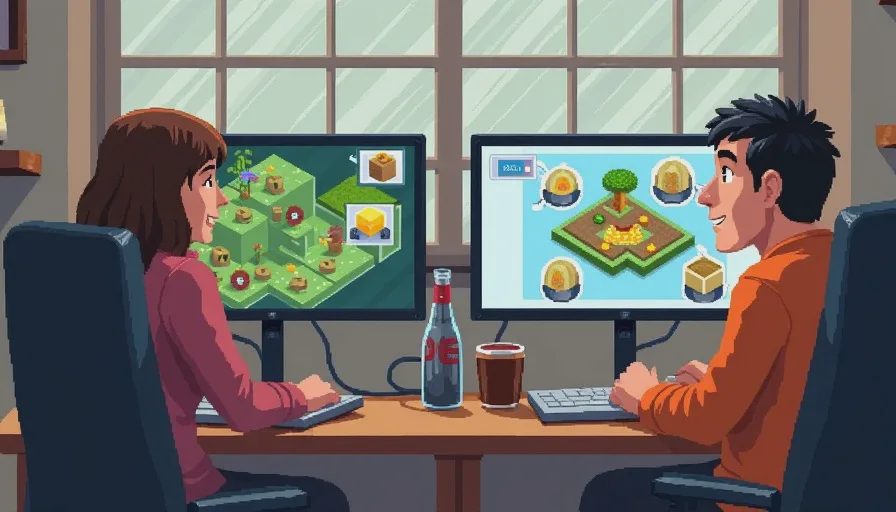
I used to use guides. I copied builds. I optimized everything.
Then I stopped.
The turning point
I was playing Elden Ring. I was using a guide. I had the best weapon. I had the best talismans. I was killing bosses quickly.
And I was bored.
I realized I wasn't playing the game. I was just executing instructions. The boss fights were easy – not because I was good, but because my build was overpowered.
I deleted the character. I started fresh. No guides. No help. Just me and the game.
What I learned
I died more. I failed more. I experimented more. I discovered weapons I never would have used. I found spells I never would have tried.
And I enjoyed it more. Every victory felt earned. Every build felt personal.
The games that changed how I think about builds
Borderlands 2
This game has a million guns. A million builds. A million ways to play. The community has found the "best" builds. But the game is more fun when you experiment. Find a weird gun. Try a weird skill. See what happens.
Guild Wars 2
This game is about exploring the world. The build is secondary. The best build is the one that works for you.
Skyrim
The game is broken. The community has found the most efficient ways to play. But the game is more fun when you role-play. Make a character with a specific identity. Play that character.
When guides are okay
I'm not a purist. There are times when guides are useful.
When you're stuck. A guide can help you past a wall.
When you've finished the game. A guide can help you find secrets you missed.
When you're playing multiplayer. You want to be useful to your team.
When you're trying something new. A guide can teach you a system you don't understand.
The problem isn't the guide itself. It's the reliance on the guide. It's the belief that the guide is the only way to play.
The test: can you play without a guide?
Here's a simple challenge. Pick a game you love. Delete your build. Stop using a guide.
Experiment. Try something that seems bad.
Fail. Learn from your mistakes.
Succeed. Discover something on your own.
Feel the joy of creating something personal.
You might be surprised by how good it feels.

No comments yet — be the first to share a thought.