We all have one. That game from five, ten, even fifteen years ago that you still bring up in conversations. The one that makes people raise an eyebrow. "That old thing? Really?"
And every time, you have to defend it. Not because it's perfect – it isn't. Not because it's the most polished experience – it's not. But because it does something that modern games don't. Something that still feels fresh, even after all these years.
Recommend one older game you'd still defend in 2026 – and tell us what makes it hold up.
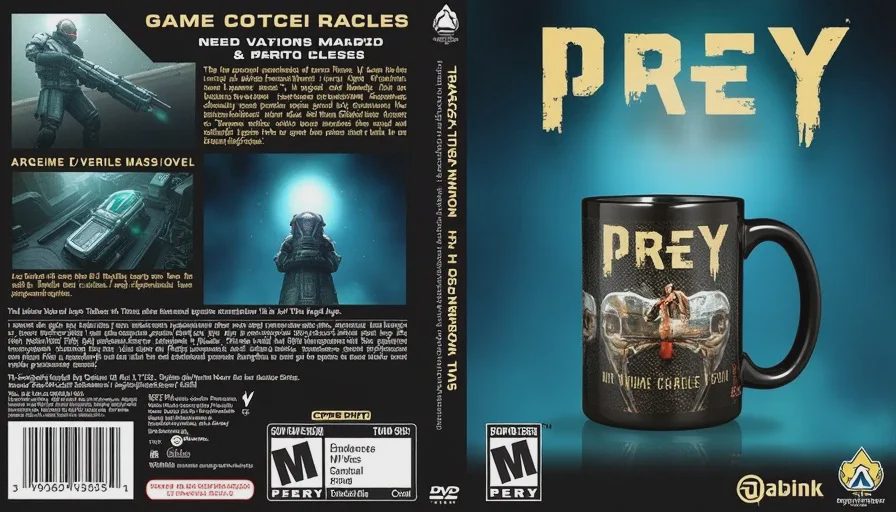
I'll go first. My pick is Prey (2017). The Arkane Studios immersive sim that sold poorly, confused audiences, and was largely forgotten by the mainstream. And I will defend it until I'm blue in the face.
My pick: Prey (2017)
Let me get this out of the way: Prey is not perfect. The combat can feel clunky. The ending is divisive. The loading screens on consoles are brutal. And the marketing was so confusing that nobody really knew what the game was trying to be.
But here's the thing: Prey does something almost no other game does. It makes you feel genuinely, desperately clever.
The glue gun that changes everything
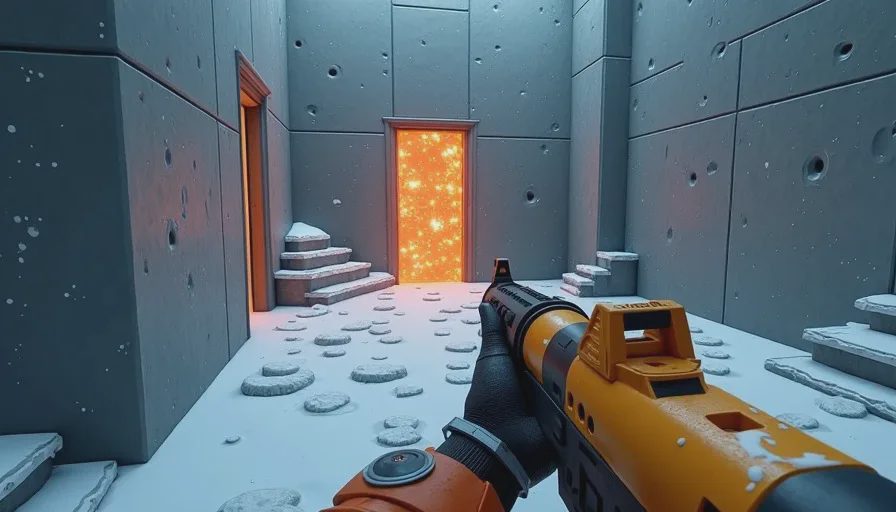
The GLOO Cannon is the most underrated tool in gaming history.
On the surface, it's a simple weapon. You shoot glue. It creates platforms. It slows down enemies. Useful, but not groundbreaking.
Until you realize what you can actually do with it.
You can create staircases to reach areas you're not supposed to reach
You can seal doors to block enemies
You can build bridges across gaps
You can trap enemies in place and run past them
You can create cover during firefights
You can block turrets so they don't shoot you
The game never tells you any of this. It just gives you the tool and lets you figure out the rest. And that's the genius of Prey – it trusts you to be creative.
The mimics that made you paranoid
Prey's central enemy is the mimic. A creature that can transform into any object in the environment. A coffee mug. A chair. A recycling bin. A soda can.
You learn to hit everything with your wrench before you pick it up. You learn to distrust your surroundings. You learn that safety is an illusion.
But the brilliance isn't just the paranoia – it's what the mimics represent. The game is constantly asking: what is real? What can you trust? And the answer is always, "not much."
The station that feels alive
Talos I is a space station. It's not a corridor shooter. It's a fully realized environment with multiple levels, interconnected areas, and a history that you uncover piece by piece.
You learn about the crew through emails and audio logs
You discover their relationships, their fears, their secrets
You find out what happened during the outbreak
You decide who to help and who to sacrifice
The station doesn't just exist as a backdrop for combat. It exists as a character. And by the end, you know it better than you know most real places.
The choices that actually matter
Prey lets you make decisions. And those decisions have consequences.
Do you kill the mind-controlled humans or find a way to save them?
Do you help the survivors or prioritize your own survival?
Do you trust the voice in your head or assume it's lying?
Do you blow up the station or try to save it?
But here's the key: the game doesn't tell you which choice is "right." It just shows you the consequences and lets you live with them.
I killed a mind-controlled human in my first playthrough. I thought I was being merciful. Then I found a note later that identified them as a parent with children back on Earth. I carried that guilt for the rest of the game.
The ending that made me re-evaluate everything
I won't spoil the ending. But I will say this: when the credits rolled, I sat in silence for five minutes. Not because I was sad – but because I realized that everything I had experienced was being reframed.
The ending asks you to question what you've done. Not in a cheesy "it was all a dream" way – but in a way that made me think about every choice I made. And it didn't give me easy answers.
That's a rare thing. Most games give you a conclusion and move on. Prey gave me a question that I'm still thinking about years later.
The broader question: what makes an older game hold up?
Prey is my pick. But the question isn't about Prey – it's about your pick. So let's talk about what makes any older game worth defending years later.
It does something unique
The games that hold up are the ones that do something no other game does. Not "better." Different. They offer an experience you can't get anywhere else.
Prey gives you the GLOO Cannon
Outer Wilds gives you a time loop in a handcrafted solar system
Disco Elysium gives you an RPG where combat is optional and your brain is the battleground
Katana Zero gives you a one-hit-kill samurai with time-bending mechanics
What Remains of Edith Finch gives you a house full of deaths, each told in a different style
When a game is truly unique, it stays relevant. You can't replace it with a newer version because nothing else does what it does.
It respects your intelligence
The best older games don't hold your hand. They explain their mechanics, then let you figure out the rest.
Prey doesn't tell you how to use the GLOO Cannon creatively
Dark Souls doesn't tell you where to go or what to do
Dishonored doesn't tell you the "right" way to complete a level
Hitman doesn't tell you which disguise to use
When a game trusts you to be smart, you feel smart. And that feeling stays with you long after you've finished it.
It takes risks
The games that hold up are rarely the safe ones. They make bold choices that could have failed – and sometimes, they do fail. But the ones that work are unforgettable.
Prey's mimic concept could have been annoying. Instead, it was brilliant.
Disco Elysium's no-combat system could have been boring. Instead, it was revolutionary.
Outer Wilds' 22-minute time loop could have been frustrating. Instead, it was sublime.
Risk-taking creates memorable experiences. Safe games are forgotten; risky ones are defended.
It has a strong identity
The games that last are the ones with a clear voice. They know what they are.
Prey is a game about paranoia and creativity
Disco Elysium is a game about failure and regret
Outer Wilds is a game about curiosity and letting go
Katana Zero is a game about guilt and second chances
When a game has a strong identity, it's easy to remember. And it's easy to defend, because you know exactly what you're defending.
What about the ones that don't hold up?
It's also worth acknowledging the games that don't survive the test of time. The ones you loved at release but wouldn't recommend now.
Games that rely on novelty that's been replicated elsewhere
Games that were technically impressive but mechanically shallow
Games that were carried by their graphics and now look dated
Games that were designed for a specific era of gaming that no longer exists
These games are fine. They were good for their time. But they don't deserve defending in 2026. And that's okay – not every game needs to be timeless.

No comments yet — be the first to share a thought.