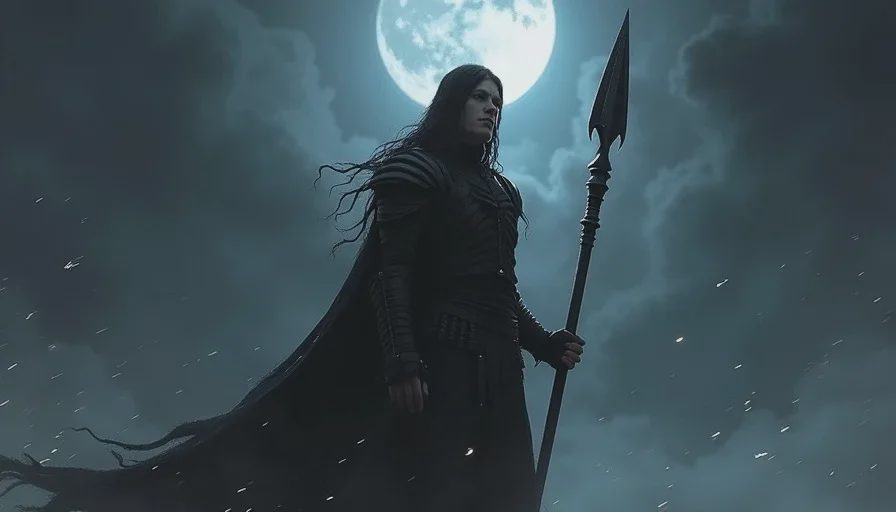
You know that feeling. The credits roll. You sit in silence for a moment. Maybe you stare at the screen. Maybe you close the game and just sit there, processing.
A week goes by. You've started something else. You're back at work. Life moves on.
But something from that game is still there. It surfaces at unexpected moments. In the shower. While you're driving. Right before you fall asleep. A moment. A character. A choice. A feeling.
After finishing Baldur's Gate 3, what part stayed with you most a week later?
Not the mechanics. Not the build you used. Not the boss fight you struggled with. Those fade. What lingered was something different – something the game did to you that you couldn't shake.
The game that refuses to leave
Baldur's Gate 3 is enormous. A hundred hours. A hundred choices. A hundred characters. But a week after you finish, most of that blurs together. What remains are the moments that hit you somewhere deeper.
For different players, those moments are completely different.
Some people can't stop thinking about a single dialogue choice. Others keep replaying a cutscene in their head. Others are haunted by a character they failed to save. And some are still angry about an ending they didn't want but couldn't avoid.
So I asked around. I collected the parts that lingered – the ones that refused to fade. Here's what players said.
The companion who felt real
Astarion's journey
For many players, Astarion is the character who stuck with them longest. Not because he's charming – though he is. Not because he's funny – though that helps. But because his arc is one of the most honest portrayals of trauma in any game.
One player told me: "A week later, I was still thinking about the moment he killed Cazador. He was sobbing. Not crying – sobbing. And I realized that I'd spent the whole game laughing at his jokes, and I had completely missed how broken he was underneath. The game didn't force me to see it. It just showed me, and then let me decide if I cared."
The scene sticks because it's earned. You've been traveling with Astarion for eighty hours. You've seen his masks. You've heard his deflection. And then, finally, you see what's underneath. It's ugly and raw and uncomfortable. And it changes how you see everything he said before.
Shadowheart's choice
Another player had a different lingering memory: Shadowheart in the Shadowfell.
"I had to decide whether to let her kill the Nightsong or stop her. And I knew she was being manipulated. I knew she'd regret it. But I also knew that taking that choice away from her was a violation. I let her decide. She threw away the spear. And then she just... fell apart. She had lost her goddess. She had lost her purpose. And she had to rebuild herself from nothing.
"A week later, I was still thinking about what I would have done in her place. And I still didn't know the answer."
Karlach's ending
If there's one character who left players emotionally wrecked, it's Karlach. Her ending is brutal. Even the "good" ending is a tragedy.
One player said: "I literally sat through the credits crying. Not because I was sad – I was angry. Angry that I couldn't save her. Angry that the game made me love her and then took her away. I went back and reloaded a save from twenty hours earlier just to see if I could change something. I couldn't."
That's the power of a well-written character. You don't just care about them – you feel responsible for them. And when the game takes them away, you can't just shrug it off.
The choice you're still questioning
The Emperor or Orpheus?
Late in the game, you're forced to choose between trusting the Emperor or freeing Orpheus. It's one of the hardest decisions in the entire game – and players are still debating it.
One player told me: "I trusted the Emperor. He had been with me the whole game. He had saved me multiple times. He never lied to me. Orpheus was a stranger. It seemed obvious.
"Then I saw the ending. The Emperor took control of the Netherbrain and sailed off into the stars. He said he'd protect the city. But I didn't believe him. And I spent the entire ending sequence waiting for him to betray me. He didn't. But I didn't trust him. And a week later, I was still wondering if I had made the right call."
Another player made the opposite choice: "I freed Orpheus. It was the right thing to do, morally. But he was a githyanki prince with no connection to me. The Emperor had been my ally. I felt like I had stabbed a friend in the back. And even after I finished, I kept thinking: was I just being self-righteous?"
The dark urge
Some players chose to resist the dark urge. Others embraced it. And both sides had lingering regrets.
"I resisted the entire game," one player said. "I never gave in. And at the end, I still had the urge. The game didn't reward me for being good. It didn't give me a happy ending. I just... survived. And a week later, I was still wondering if I had made myself weaker by fighting it."
Another player went the other way: "I embraced the urge. I killed everyone. I became the slayer. And it was a total power fantasy. But a week later, I felt hollow. I had no one left. Every companion had either left or been killed. The game let me do it – and it showed me exactly what that kind of power costs."
The last companion you lost
For many players, the moment that lingered wasn't a choice you made – it was a choice you couldn't make.
"There was a moment in Act 3 where I had to sacrifice a companion," one player said. "I had to choose who would die. I spent fifteen minutes trying to find a way out. There wasn't one. So I picked Wyll. He was the one I cared about least.
"And a week later, I was still thinking about that decision. I didn't even like Wyll that much. But I had made him a promise. I had told him I'd help him break his pact. And then I sacrificed him because it was convenient. The game didn't call me out on it. But I called myself out."
The moment that redefined the game
The Act 2 climax
For some players, the moment that lingered was the final showdown in Act 2. The entire shadow-cursed lands. The siege of Moonrise Towers. The confrontation with Ketheric Thorm.
"Act 2 was when the game stopped feeling like a D&D campaign and started feeling like something else," one player said. "The atmosphere was oppressive. The music was haunting. And Ketheric was genuinely terrifying – not because he was powerful, but because he was tragic. He had lost everyone. He had lost hope. And he just wanted to die.
"The game made me feel sorry for him. For a villain who had caused so much death. A week later, I was still thinking about his final speech. He wasn't wrong. He was just broken."
The House of Hope
Another player had a different lingering moment: the House of Hope.
"The music," they said. "I still hear it in my head. The fight against Raphael was incredible – but what stayed with me was the atmosphere. The beautiful, horrifying opulence. The singing. The feeling that I had walked into a trap and I knew it and I couldn't stop myself.
"A week later, I was still thinking about how that whole sequence made me feel. Not scared. Not excited. Just... unsettled. Like I had seen something I wasn't supposed to see."
Why these moments stick
Baldur's Gate 3 is a rare game. It doesn't just let you make choices – it makes you live with them. And the ones that stick are the ones that force you to confront something about yourself.
They reflect your own values
When you're still questioning a choice a week later, it's because the choice touched something real. Maybe it was about trust. Maybe it was about sacrifice. Maybe it was about what you're willing to compromise. The game held up a mirror, and you didn't always like what you saw.
They feel earned
None of the lingering moments are unearned. You've spent a hundred hours with these characters. You've invested in them. So when something happens to them, it matters. The game doesn't shock you into caring – it builds a relationship and then puts it at risk.
They're complex
The best lingering moments are the ones that aren't simple. There's no clear "right" answer. No easy resolution. Just a question that stays with you.
The opposite: moments that faded
It's worth noting what didn't stick.
The combat mechanics faded quickly. The builds faded. The bosses faded. Even some of the big set-pieces – the ones that were designed to be memorable – didn't last.
What faded were the moments that were purely mechanical. The ones that didn't involve characters, choices, or emotion. The game was full of them – and they were fun in the moment. But a week later, they were gone.

No comments yet — be the first to share a thought.