
Every gamer has one. An ending that stuck with them long after the credits rolled – not because it was a happy ending, not because it was sad, but because it left them genuinely uncertain about how to feel. Not confused. Not angry. Just... divided.
And that division wasn't just about the ending itself. It was about what the ending meant. It was about whether the story earned that conclusion. It was about whether the characters deserved that fate. It was about whether the game had been building toward that moment all along, or whether it had veered off course at the last second.
What ending divided players for good reason, not just because it was unexpected? An ending that made people argue about it on forums for years. An ending that changed how you saw the entire game. An ending that still sparks debate a decade later.
What makes an ending "divisive for good reason"?
Let's separate the real division from the cheap stuff.
Not just a shocking twist
A plot twist that comes out of nowhere with no setup is just a surprise. Players don't argue about whether it was earned – they just move on. Real division comes from endings that feel inevitable and avoidable at the same time.
Not just ambiguous
Ambiguous endings are fine, but they don't usually create deep divides. Players might speculate about what happened, but they don't argue about whether the ending was good. Real division comes from endings where players disagree on what the story was even trying to say.
A genuine moral or thematic choice
The best divisive endings force you to confront something uncomfortable. They ask you to decide what you believe. And different players – even those who loved the game – will walk away with completely different answers.
Five endings that divided players for good reason
These are the ones that still come up in conversation. The ones that made people write essays. The ones that created camps – some players defending them passionately, others calling them betrayals.
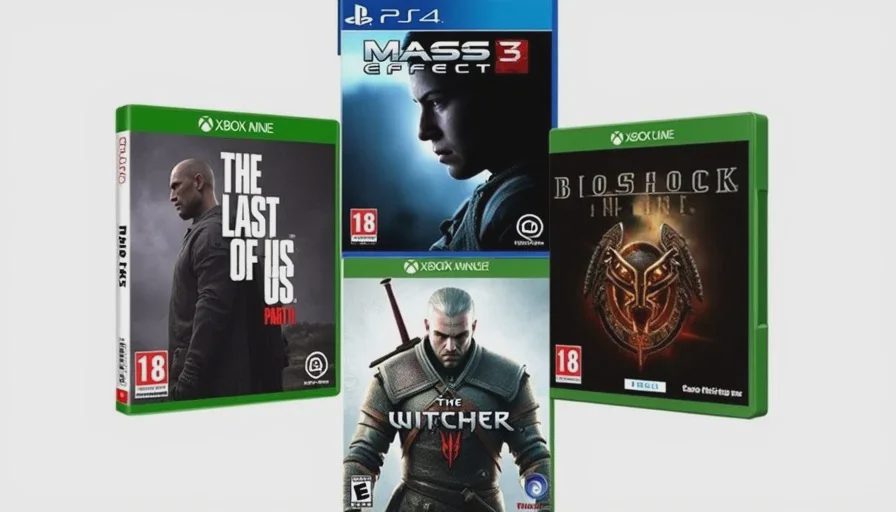
The Last of Us Part II: The price of revenge
The Ending:
Ellie tracks Abby to California. They fight on a beach, in the water, exhausted and broken. Ellie has Abby under her, drowning her. The game flashes back to Joel on his porch, the night before he died, when Ellie was trying to forgive him.
She stops. She lets Abby go. She sits in the water, alone, while Abby sails away with Lev.
Why It Divided Players:
This wasn't just unexpected. It wasn't just sad. It was frustrating.
Some players felt that the entire game had been building toward this confrontation. They had killed hundreds of people to get here. They had lost everything. And then, at the last possible moment, Ellie walked away. It felt like the game was punishing them for caring.
Other players saw it as the only possible ending. Ellie wasn't killing Abby to save anyone. She wasn't killing Abby to protect herself. She was killing Abby for revenge – and the flashback showed her that doing so would betray the person Joel had become to her. Letting Abby go was the first unselfish choice Ellie had made in the entire game.
The Real Debate:
Was Ellie's journey a descent into senseless violence that she finally broke out of? Or was it a story that built toward catharsis and then chickened out?
Both interpretations have evidence. Both have emotional weight. That's why players are still arguing about it five years later.
Mass Effect 3: The three choices
The Ending:
Shepard reaches the Catalyst. Three options appear:
Control the Reapers and force them to leave
Destroy the Reapers but sacrifice all synthetic life
Merge all organic and synthetic life into a new form
Each choice has consequences. None of them are obviously correct. And Shepard – the character you've guided for three games – dies in every version except one.
Why It Divided Players:
This isn't just about the choices being tough – it's about them being tacked on.
For three games, the series had been about choices with consequences. Small choices. Big choices. Choices that rippled across entire galaxies. Players expected an ending that reflected their specific journey.
Instead, they got three generic options that were largely the same regardless of what they had done. The ending felt disconnected from the player's agency. It felt like the developers had run out of time and just wanted to wrap things up.
The Real Debate:
Was the ending a thematic conclusion to a trilogy about choice and consequence? Or was it a rushed cop-out that betrayed the franchise's core premise?
Some players defended it as a commentary on the impossibility of perfect choices. Others saw it as a failure to deliver on a promise. The debate went on so long that BioWare released a free DLC that extended the ending – and people still weren't satisfied.
The Witcher 3: Ciri's fate
The Ending:
Ciri's fate depends on the choices you make throughout the game. Specifically, how you treat her. Whether you trust her. Whether you let her make her own decisions.
She can become a witcher. She can become empress of Nilfgaard. Or she can die.
Why It Divided Players:
On one level, this is a beautifully designed ending. Your choices matter. The way you treated Ciri – with respect or with overprotectiveness – determines her path. It's earned.
But the division came from what each path meant.
Some players saw the witcher ending as the "happy" ending. Ciri is free. She's doing what she loves. She's with her family.
Other players saw the empress ending as the "responsible" ending. Ciri has the power to change the world. Becoming empress is a sacrifice, but it's the right thing to do.
And the death ending? Some players saw it as a failure – a punishment for treating Ciri like a child. Others saw it as a tragic but inevitable outcome in a world full of violence.
The Real Debate:
The game doesn't tell you which ending is "correct." It forces you to decide what you think Ciri would actually want. And players who read the character differently arrived at different conclusions.
Bioshock Infinite: The many worlds
The Ending:
Booker DeWitt discovers that he and the villain, Comstock, are the same person from different timelines. The game ends with Elizabeth drowning Booker at the moment he was supposed to be baptized, preventing Comstock from ever existing.
Then the screen goes black.
Why It Divided Players:
This is one of the most discussed endings in gaming history. Not because it's shocking – the twist is set up early. But because it fundamentally reinterprets everything that came before.
Some players saw it as a masterpiece of narrative design. The game had been about multiple timelines from the beginning. The ending was the logical conclusion of everything the story had been building toward. It was thematically consistent, emotionally resonant, and structurally brilliant.
Other players saw it as pretentious nonsense. The multiverse explanation felt like a convenient way to avoid having to write a real ending. The game raised more questions than it answered. And the final scene – showing Booker in 1893, apparently alive again – undercut whatever closure the drowning was supposed to provide.
The Real Debate:
Was Bioshock Infinite a brilliant meditation on guilt, redemption, and the impossibility of escaping your own past? Or was it a confusing mess that thought it was smarter than it actually was?
Dark Souls: The choice that changes nothing
The Ending:
You reach the First Flame. Two choices appear:
Link the fire, sacrificing yourself to prolong the Age of Fire
Let the fire fade, ushering in the Age of Dark
Either way, the game ends. Either way, the cycle continues. The world doesn't change. The choice is effectively meaningless.
Why It Divided Players:
For a game that's famously opaque, the ending is deceptively simple. And that simplicity created a genuine divide.
Some players saw this as the ultimate expression of Dark Souls' nihilism. The world is broken. Nothing you do matters. The only meaningful choice is the one you make for yourself – whether to prolong a dying world or let it end. The lack of consequences is the point.
Other players saw it as a cop-out. Why build a game around challenging combat if the ending is just a binary choice that changes nothing? Where's the payoff for all that effort? The game's refusal to provide closure felt more like laziness than philosophy.
The Real Debate:
Is Dark Souls' ending a profound statement on the futility of trying to fix a broken world? Or is it just a two-button choice that the developers didn't bother to flesh out?
Why these endings still matter
The endings that divide players for good reason are the ones that stick with you.
They ask you to think, not just feel
A sad ending makes you cry. A happy ending makes you smile. But an ending that divides you – that makes you argue with yourself – keeps you thinking for days.
They make you question the rest of the game
When an ending genuinely divides players, it forces you to re-evaluate everything that came before. Did the story earn this conclusion? Was the character's journey leading here all along? That questioning makes the entire experience richer.
They create a community of interpretation
The best endings make you want to talk to other players. Not to argue about who's "right," but to understand how someone else saw the same story differently. That shared exploration is what gaming communities are built on.
The opposite: endings that divided players for the wrong reasons
Not all divided endings are created equal. Some divide players because they're just badly written.
The "it was all a dream" ending
This is the cheapest division you can create. Players argue about whether it was clever or lazy. Usually, it's just lazy.
The cliffhanger that never resolved
When a game ends on a cliffhanger and then never gets a sequel, players are divided – but not about the story. They're divided about whether it's worth caring about anything the game set up.
The "your choices didn't matter" ending
Some games promise meaningful choices and then deliver an ending that's identical regardless of what you did. Players divide along obvious lines: those who saw it as a commentary on fate, and those who saw it as a cheap trick.
No comments yet — be the first to share a thought.